
To grow Instagram followers organically in 2026: pick a narrow niche, post 3-5 times per week mixing reels + carousels + stories, engage with similar-sized accounts in your niche (reply fast in the first 15 min), optimise your bio for clarity, and stick with it for 6+ months. Skip buying followers, follow-unfollow tactics, and engagement pods — all of them backfire.
⚡ Key takeaways
- Narrow niche beats generic “lifestyle” positioning every time.
- Mix reels (reach) + carousels (saves) + stories (loyalty).
- Reply to first 15 min of comments — algorithm signal.
- Collab with similar-sized accounts in your niche.
- Bought followers, follow-unfollow, engagement pods all backfire.
Why 5,000 engaged followers beat 50,000 bought
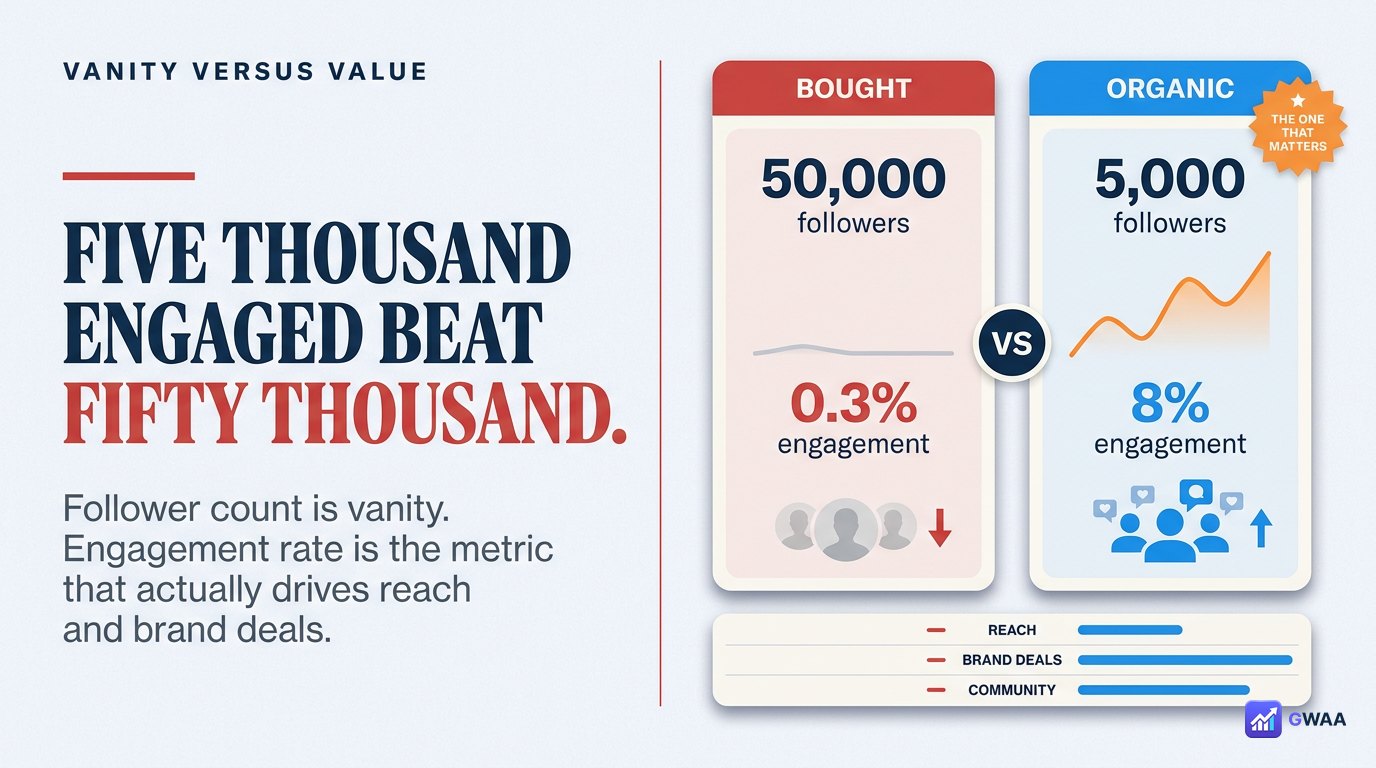
Before any growth strategy, internalise this: follower count is a vanity metric. Engagement rate is the metric that matters. A 5,000-follower account with 8% engagement outperforms a 50,000-follower account with 0.3% engagement on every dimension that matters — brand deals, algorithm reach, community loyalty, monetisation, sales conversion.
This is why “buying followers” backfires. A 50,000-follower account with bought followers:
- Has bot/inactive accounts that never engage, dragging engagement rate to 0.x%.
- Triggers algorithm-quality flags that suppress your future reach.
- Is instantly detectable by brand managers via standard influencer audit tools.
- Provides zero monetisation value because bought followers don’t buy products.
Organic growth is slower, but everything you build is real.
Start with a narrow niche
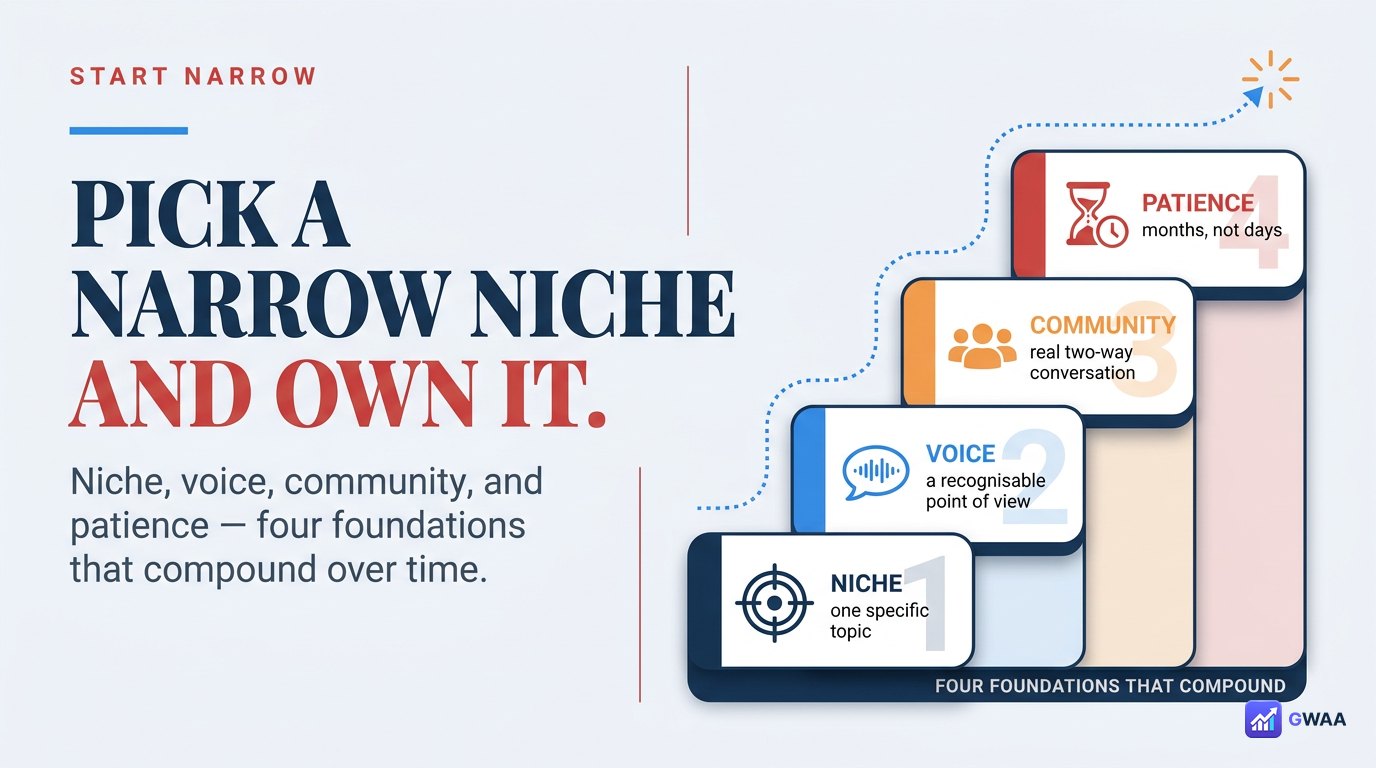
The single biggest growth lever is choosing a specific niche. Generic “lifestyle” accounts struggle because:
- They’re competing against millions of similar accounts.
- They have no distinct audience to attract.
- The algorithm can’t place them with the right viewers.
A narrow niche flips this:
- Generic: “Food lover sharing my meals.” Millions of competitors.
- Narrow: “Sourdough bread for beginners using overnight cold ferment.” A specific, identifiable audience.
The narrower you go, the faster you build authentic following. Counter-intuitively, niching down expands your potential audience because you become discoverable to the people who specifically want what you make.
Mix all four content formats
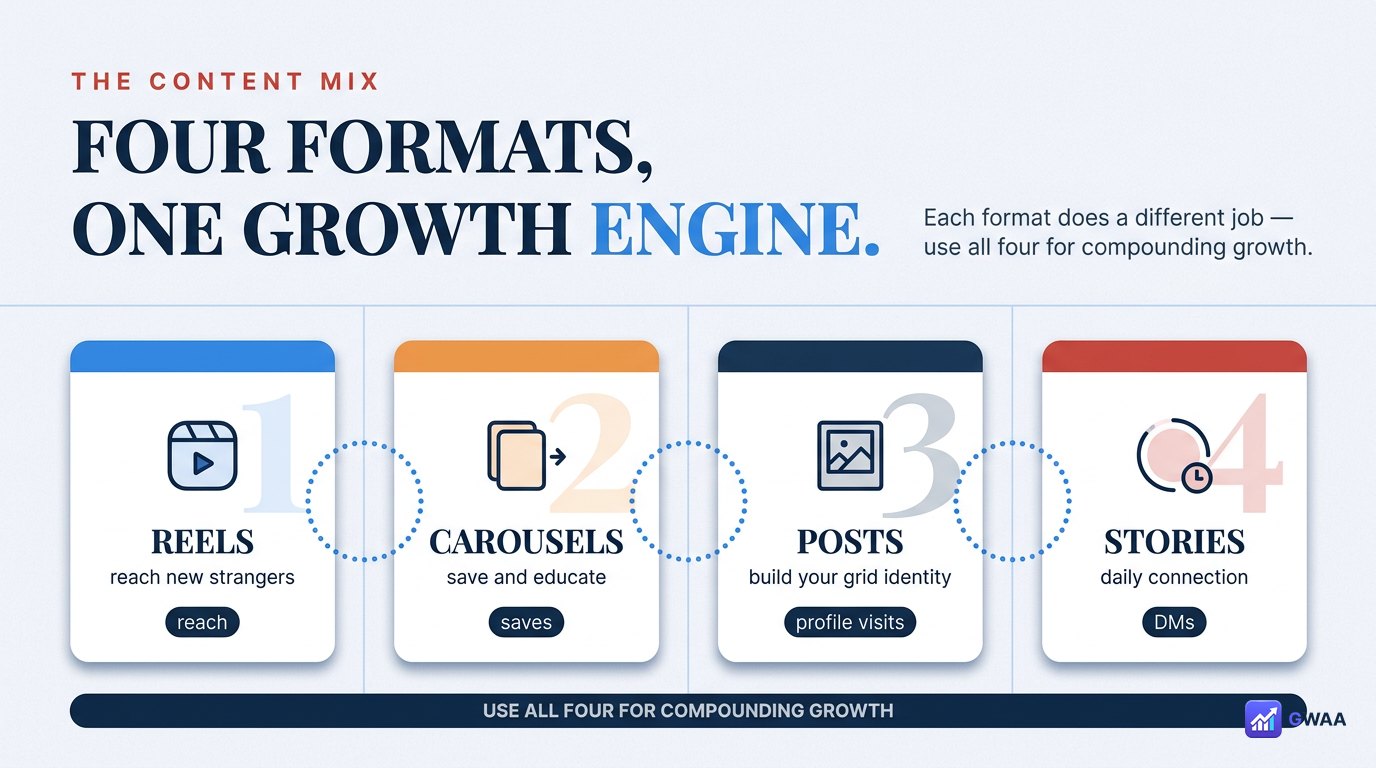
Each Instagram format serves a different purpose in growth:
- Reels: The reach engine. Reels are still favoured by the algorithm in 2026 for new-audience discovery. 1-2 per week minimum.
- Carousels: The save engine. Multi-slide posts trigger saves and shares more than any other format. Carousel posts are weighted highly because saves signal high-value content.
- Single image posts: The efficiency play. Easier to produce, still get engagement from existing followers. Good for fitting between reels and carousels.
- Stories: The loyalty layer. Stories don’t bring new followers but keep existing ones engaged. Daily stories matter for retention.
Don’t skip any. Accounts that only post one format underperform accounts that mix all four.
A realistic posting schedule
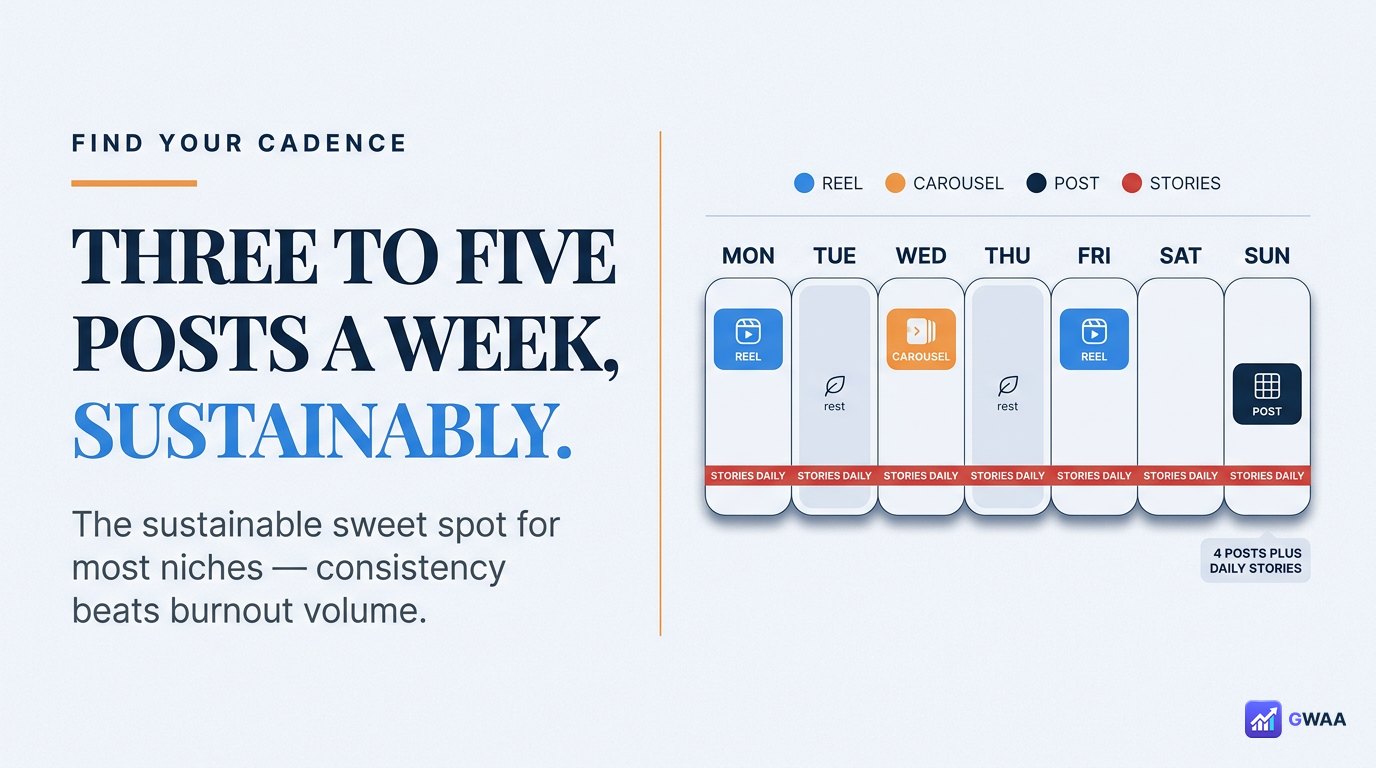
The right posting cadence depends on your niche, but the sweet spot for most accounts is 3-5 posts per week:
- Lifestyle / fashion / food: 5 per week (peak frequency niches).
- Travel / photography: 3-4 per week.
- Business / B2B / education: 2-3 per week (quality over volume).
- Stories: Daily, regardless of niche. They’re ephemeral; ratchet up the floor.
A workable weekly template:
- Monday: Carousel post (educational / value-dense).
- Tuesday: Story-only day.
- Wednesday: Reel.
- Thursday: Single image post.
- Friday: Reel.
- Saturday: Carousel.
- Sunday: Story-only day.
Adapt based on what works for your audience. The key is consistency — the algorithm rewards predictable posting patterns.
The engagement loop that compounds
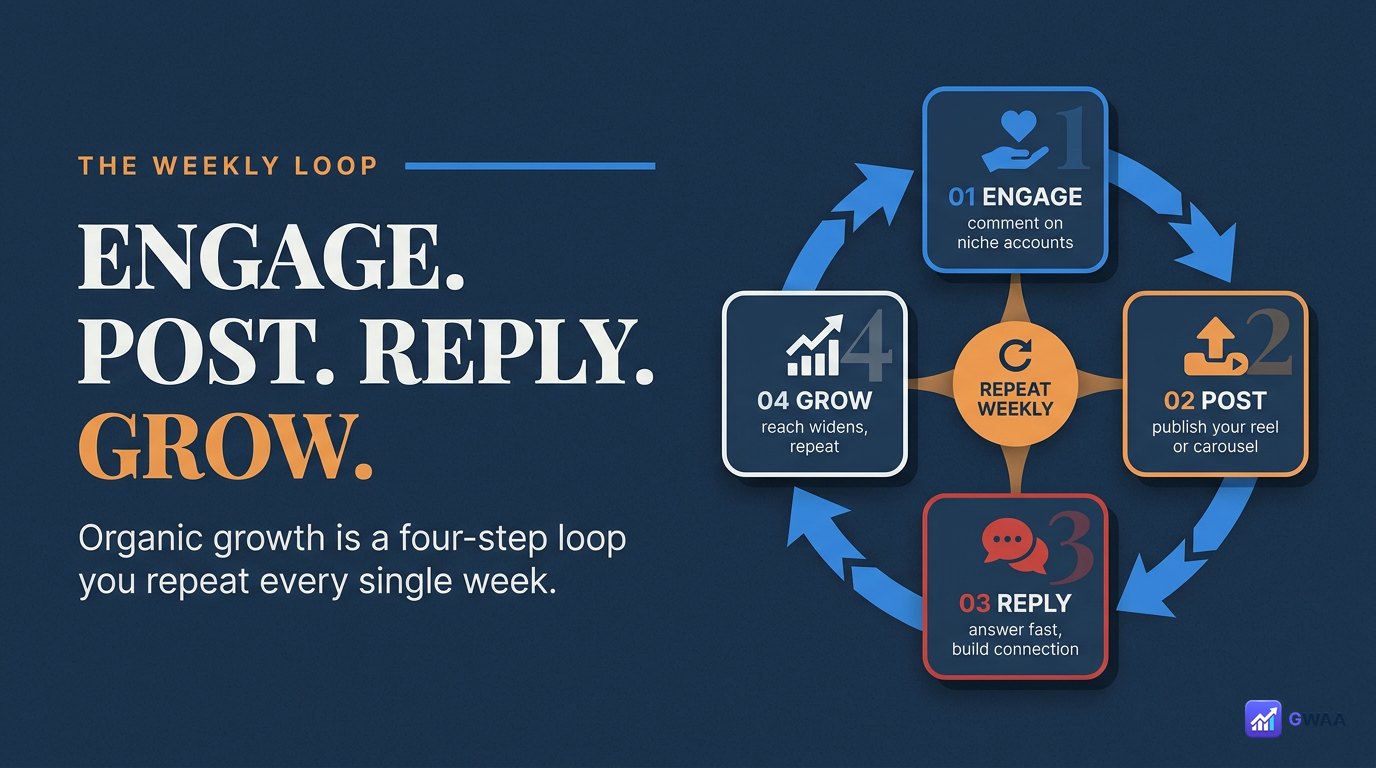
Organic growth is a four-step loop that you repeat every week:
- Engage on niche posts (30 min daily). Like and comment thoughtfully on accounts in your specific niche, sized similar to or slightly bigger than yours.
- Post valuable content (per your schedule). Each post should give the audience something specific — a tip, a beautiful image, a story.
- Reply to comments quickly (especially the first 15 min). This signals algorithm quality and extends reach.
- Niche users follow. The combination of your engagement on their feed + your valuable content + your reply rate brings them.
The first three steps are completely within your control. The fourth happens automatically when the first three are right.
Hashtag strategy that still works
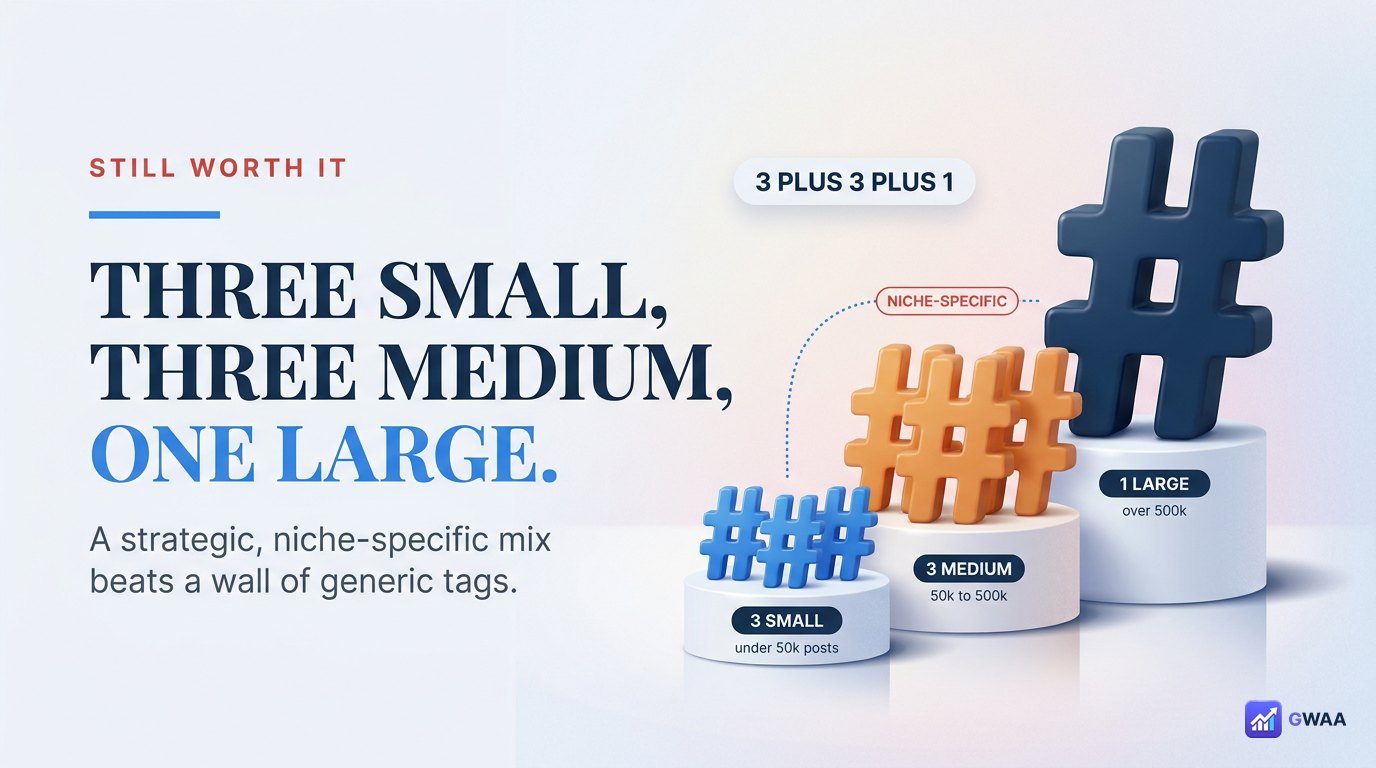
Hashtags are less powerful in 2026 than they were in 2020, but they still help — if used strategically. The right mix:
- 3 small (under 10K posts): Niche-specific. You can rank in the top 9 for these. Example: #sourdoughbeginner.
- 3 medium (10K-500K posts): Niche-adjacent. Provides discovery without instant dilution. Example: #homebakery.
- 1 large (500K-5M posts): Broad reach. Won’t rank you but helps the algorithm understand the post. Example: #foodphotography.
Avoid the giant (5M+ posts) hashtags entirely — #love, #life, #instagood. You won’t be discovered there; the noise floor is too high.
Collab with similar-sized accounts

One of the highest-leverage growth tactics that costs nothing: collaborate with accounts roughly your size in your niche. Why:
- Same-size collabs expose you to a fresh audience that’s already interested in your niche.
- Both accounts benefit; nobody is “giving up” reach.
- Instagram’s Collab post feature explicitly supports this with co-credited posts.
- It builds real relationships in your niche over time — useful far beyond a single collab.
Chasing collabs with much-bigger accounts is mostly fruitless — they get hundreds of requests and have nothing to gain. Aim sideways.
Reply fast in the first 15 minutes

The single most underrated growth habit: reply to comments within the first 15 minutes of posting. Two reasons:
- Algorithm signal. Instagram’s ranking algorithm uses early-engagement velocity as a quality signal. High activity in the first 15 minutes pushes the post to more feeds; quiet first 15 minutes suppresses it.
- Real connection. Followers who get a quick reply remember it. They’re more likely to comment on your next post, share, and tell friends.
Practical: set a 15-min timer when you post. During that window, do nothing else — just reply to every comment, ask follow-up questions, react with emojis. After 15 min you can move on.
Bio optimisation: the first 5 seconds
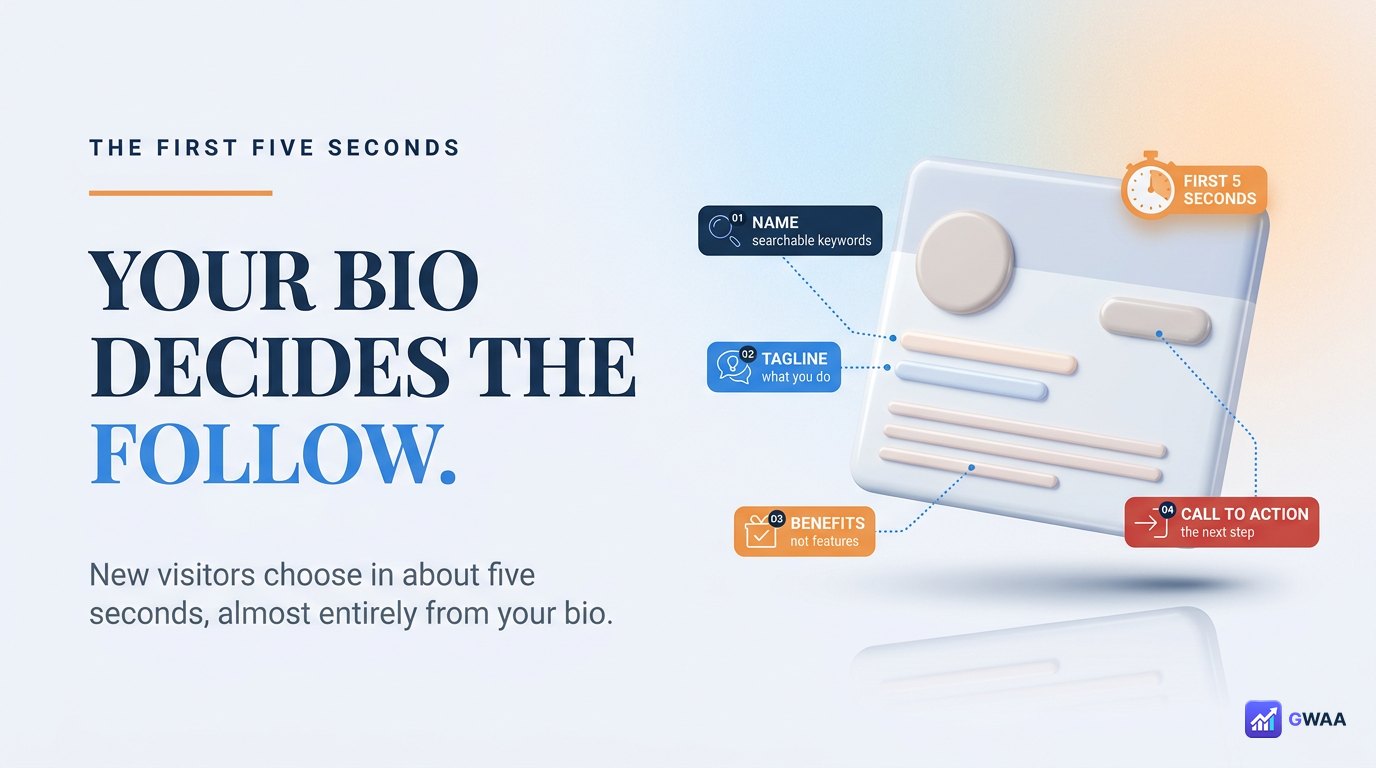
New visitors decide whether to follow you in about 5 seconds, almost entirely based on your bio. Four elements to optimise:
- Name field (NOT username): Include keywords. Instagram’s search uses this field. “Sara | Sourdough for Beginners” > just “Sara”.
- Tagline: Plain-English description of what you do for whom. “Teaching home bakers how to make perfect sourdough in their regular oven.”
- Benefit bullets (1-3 lines): What followers GET from following you. “Weekly recipes · No-fail techniques · Beginner-friendly”.
- CTA + link: A clear next-step like “👇 Free starter guide” pointing to your link-in-bio.
Test your bio by showing it to someone who doesn’t know what you do. If they can’t describe you in one sentence after 5 seconds, rewrite.
Three growth hacks that backfire
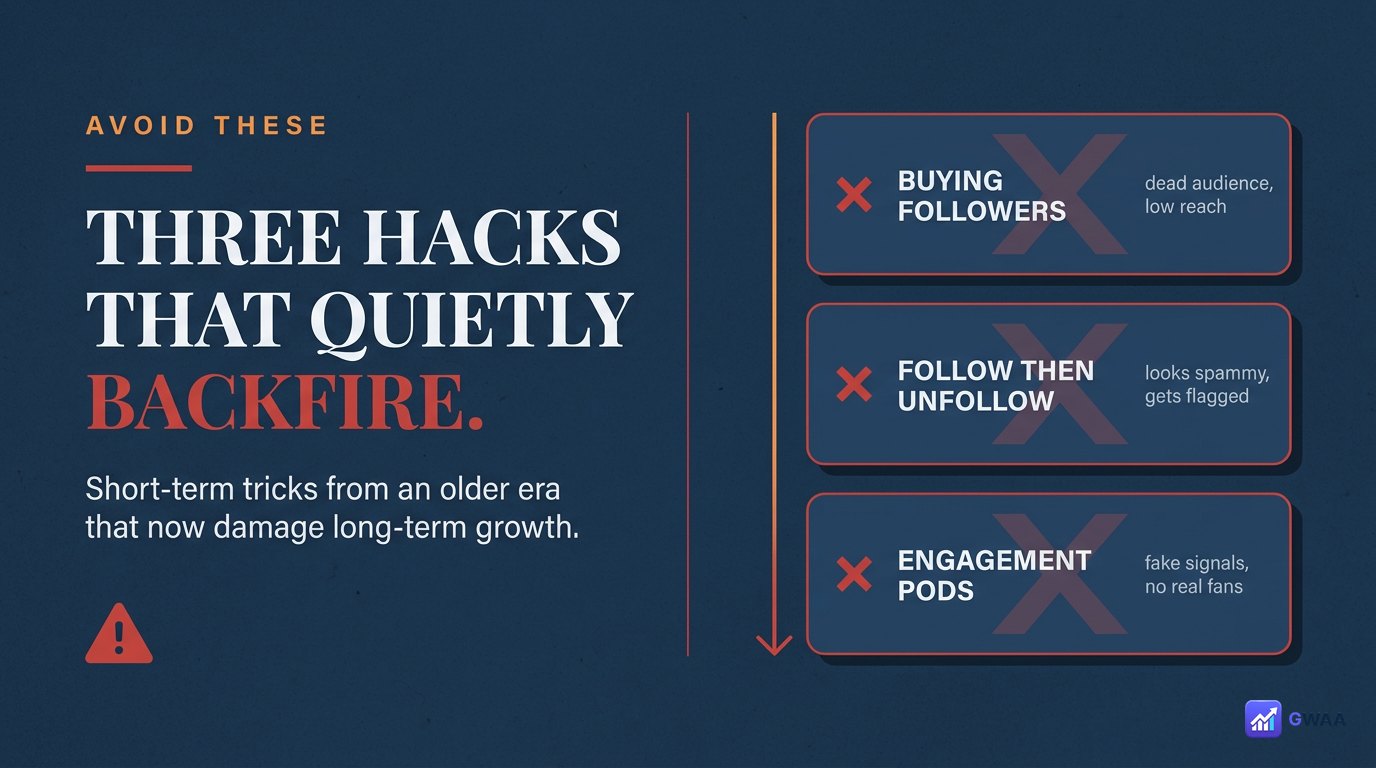
Three tactics promoted in 2018-2022 that no longer work and actively damage your account:
- Buying followers. Tanks engagement rate, triggers algorithm-quality flags, instantly visible to brand managers via audit tools. Worst short-term-for-long-term-damage trade in social media.
- Follow-unfollow: Mass-following accounts hoping they follow back, then unfollowing. Instagram now penalises this pattern algorithmically; your reach drops, your account can be temporarily restricted.
- Engagement pods: Groups of accounts that auto-like and auto-comment on each other’s posts. Detected by Instagram’s algorithm and suppressed. Comments from pods don’t convert to followers anyway.
All three are short-term gains that compound into long-term damage. If you’re tempted, the better play is patience — real growth feels slow at first but compounds reliably.
A 6-month organic growth roadmap
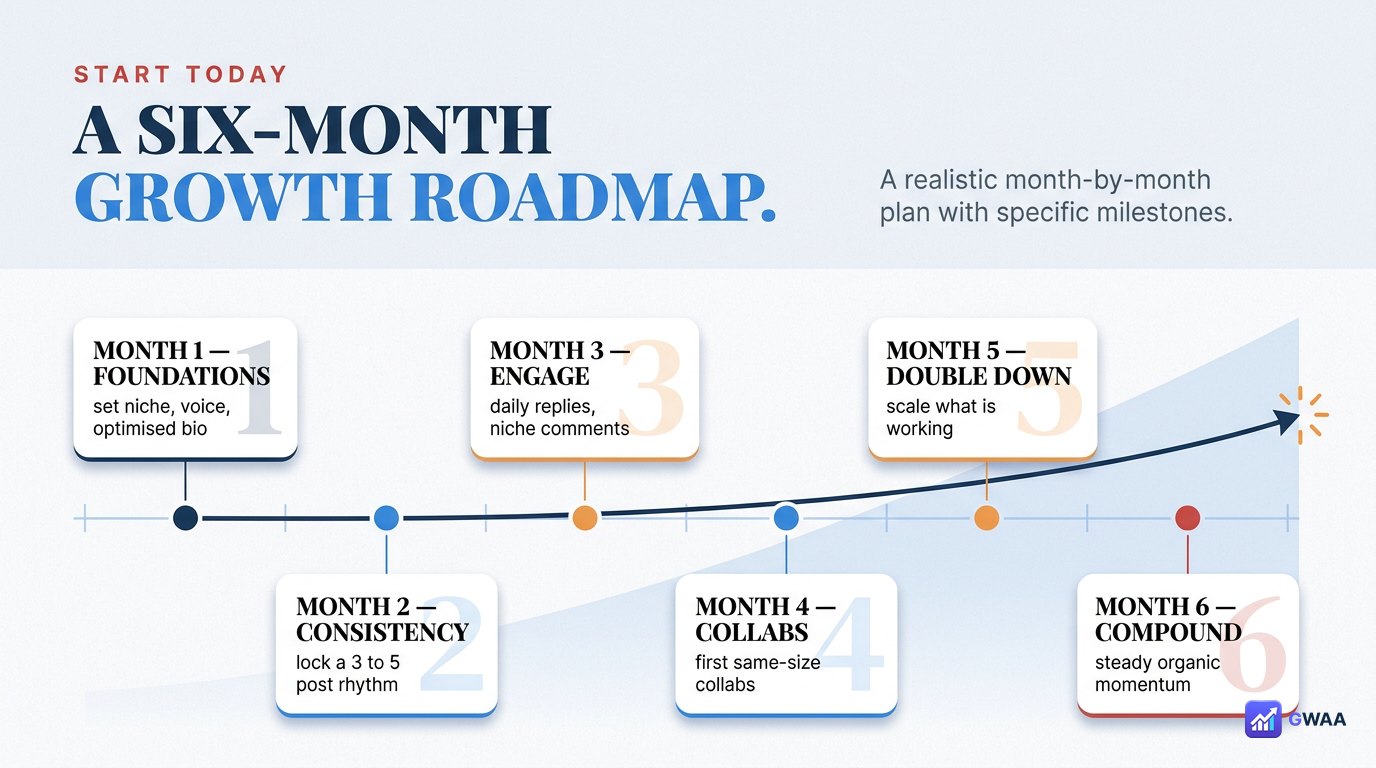
If you’re starting today, here’s a realistic month-by-month plan:
- Month 1: Define your narrow niche. Rewrite your bio. Build a content calendar for 4 weeks ahead.
- Month 2: Lock posting cadence (3-5 per week). Establish daily-story habit. Start replying to comments in first 15 min.
- Month 3: First collab with a similar-sized niche account. Cross 1,000 followers if not already.
- Month 4: Daily 30-minute engagement routine on niche posts. Audit and remove obvious bot followers.
- Month 5: Repurpose top-performing content into reels. Identify which formats/topics drove the most followers.
- Month 6: Hit 5,000-10,000 follower range with 4-6% engagement rate. Real audience, real engagement, sustainable trajectory.
Six months is realistic for most niches with consistent execution. Some niches grow faster (food, fashion); others slower (B2B, technical). Adjust expectations accordingly — what matters is the trajectory, not the absolute number at any single moment.
Content quality compounds slower but harder
One under-discussed leverage point: the quality of your single best post matters more than the average quality of your posts. The algorithm doesn’t spread reach evenly across your posts; it disproportionately rewards your top performers by pushing them to more feeds. One viral post can bring more followers than three months of average content.
Three implications:
- Spend extra time on standout content. If you have a great idea, invest in making it excellent rather than rushing it out at average quality.
- Analyse top performers monthly. What was different about your top 5 posts last month? Format, topic, hook, time? Repeat the patterns.
- Don’t lower the bar to hit a posting frequency. 3 great posts per week outperform 5 mediocre ones because the great ones go further.
Captions matter more than people think
Many creators treat captions as an afterthought. They’re actually one of the strongest engagement levers:
- The first line is critical. Instagram truncates captions after about 125 characters with a “...more” link. If your first line doesn’t hook, nobody expands. Lead with a question, a surprise, or a curiosity gap.
- Captions drive comments. A caption that ends with a clear question (“Which of these would you try?”) gets 3-5x more comments than one that doesn’t.
- Long captions can work. If your content is educational, a 200-300 word caption that delivers real value can drive significant saves and shares.
- Don’t over-emoji. One or two relevant emojis is fine; a wall of emojis looks spammy and reduces engagement.
The patience curve is real
One reason most accounts give up before they grow: the early growth curve is genuinely slow. The first 1,000 followers often take 3-4 months of consistent posting. The next 1,000 takes 1-2 months. The next 5,000 takes a few weeks. The next 50,000 takes a year. Growth compounds, but the compound period is real.
If you’re in the first six months and your follower count is in the hundreds rather than thousands, you’re not failing — you’re in the slow part of the curve. The accounts that broke out at 50K, 100K, 1M followers almost all spent 6-12 months looking exactly like your account does now.
The risk isn’t slow growth in the early phase; it’s quitting before the compounding kicks in. Consistent posting for 12 months reliably produces accounts in the 5,000-20,000 follower range with genuine engagement — the kind of accounts brands and platforms actually value.
The bottom line
Organic growth in 2026 isn’t hard, but it isn’t fast. The formula is boring: narrow niche, mixed content formats, consistent posting, fast replies, smart hashtags, niche collabs, optimised bio — repeated for at least six months.
Everything that promises faster results (bought followers, follow-unfollow tools, engagement pods, “growth services”) is either a scam or actively damaging. Patience and consistency are the only real growth levers, and they compound — in two years, accounts that did the boring work pass accounts that chased hacks every single time. Pick a niche, post consistently, engage with intent, and trust the slow compound.
Explore more across GWAA: Profile analytics explained · Highlight covers design